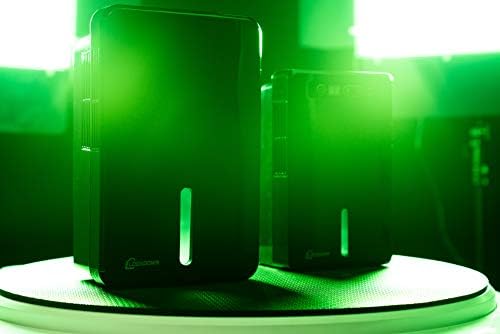
This could be a great device if the manufacturer had used slightly better components, but the design is good regardless of its shortcomings. The negative reviewers here clearly don't understand anything about environmental control. None of the cheap Peltier thermoelectric dehumidifiers on amazon will keep up with a closet full of perspiring plants or a drafty room subject to air exchange; you need a compressor based refrigeration system to do that. This device is basically a mash up of an industrial electrical cabinet Peltier dehumidifier used in professional applications and the silly mini dehumidifiers sold online and it works surprisingly well. For a lot of situations the smallest available compressor-based dehumidifier is so overkill it will just constantly cycle on and off, killing the compressor while barely removing moisture, so units like this are genuinely the only option for a lot of scenarios.
My main gripe with this thing is that the built in capacitive humidity sensor is cheap and inaccurate, as a result the readings on the front of unit are nonsensical most of the time and the programmed settings are simply not accurate. You can overcome this with a 5 dollar external hygrometer to get things dialed in properly but its annoying. The sensor inside the unit is wired so you could easily replace it with something better or even just remotely locate it outside the unit for significantly better accuracy. The availability and configuration of the drain plug on this unit is key for my needs though which makes this worth the hassle, otherwise you might be better served by an external humidistat controller and some other cheaper thermoelectric dehumidifier for roughly the same price.
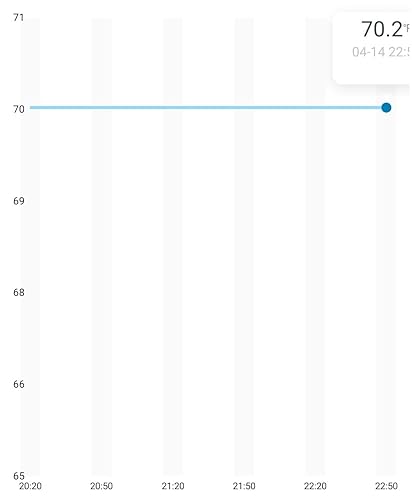
After the unit has been running for a short while the relative humidity in the enclosed space quickly drops and the temperature difference required to hit the dew point exceeds what a Peltier cooler of any size or arrangement can achieve. However it does make quick work of a large portion of the moisture in an enclosed space (see screenshot for example — very large cabinet using the smaller unit, with a computer fan circulating the air inside). This does not eliminate the need to use desiccants if you want to things to be properly dried out unfortunately but it will significantly reduce the amount of work you have to do in maintaining your desiccants over time.
key details:
1. The small unit is rated for 22.5w power consumption (label on the back of the unit), unless your space is extremely small heating shouldn't be an issue
2. It will remember your humidity setting after a power outage (or if you use an external humidistat controller)
3. Peltier temperature delta from ambient seems to max out about -27F, slightly less than it should be probably but good enough — a better internal fan or hot-side heatsink might improve this a bit
4. You can set the humidity as low as 20% but this is obviously not achievable, it will just run continuously (which is nice if you want to leverage an external controller for better accuracy)
5. At 70F ambient and external humidity at 50%, setting the unit to 40% target resulted in plateau around 47% actual, 35% target achieved 43% actual before plateauing, 30% target seems to be running mostly continuously with little further effect (42%). In all cases the front of the unit was stuck reading at 35% while running, with seemingly random drift while cycled off (this is after 24 hours of "adjusting to the environment" per the user manual lol)